
You launch a Meta ad. The targeting looks fine. The offer is good. The video took hours to make. Two days later, the results are painful — high cost, low clicks, almost no sales.
So you do what most advertisers do. You increase the budget a little. You change the audience. You tweak the headline. Nothing really moves.
Here is the uncomfortable truth most people discover too late: your ad did not fail at the landing page. It did not fail at the checkout. It failed in the first three seconds — before most people even understood what you were selling.
On Facebook and Instagram, you do not buy attention. You buy a chance to earn it. An impression only means your ad appeared on a screen. It does not mean anyone stopped, watched, or cared. If a person scrolls past in half a second, Meta still counts that impression — and you still pay for it.
That is why the first three seconds decide almost everything that follows: your click-through rate, your cost per click, and whether Meta keeps showing your ad to more people at a reasonable cost.
The Problem: You are paying for impressions, not attention
Think about how you use Instagram or Facebook yourself. You are not sitting there waiting for ads. You are scrolling fast, half-distracted, sound usually off, thumb ready to move. An ad has to interrupt that motion. Not annoy you — interrupt you with something relevant enough that you pause.
Advertisers have a name for that pause: the hook. And they measure it with a simple metric most beginners never even add to Ads Manager.
HOOK RATE: Hook Rate = (3-second video views ÷ Impressions) × 100. If 10,000 people saw your ad and 2,400 watched at least 3 seconds, your hook rate is 24%.
There is no official benchmark published by Meta, so use practitioner benchmarks as a guide — and always compare like with like (Reels with Reels, Feed with Feed, cold audience with cold audience).
| Hook Rate | What it Means | What to Do |
|---|---|---|
| Below 15% | Almost invisible. The opener is not working at all. | Pause or rebuild the opening before spending more. |
| 15% – 25% | Fix-it zone. Some people stop; most do not. | Rewrite the first frame and first line. Test new hooks. |
| 25% – 30% | Workable baseline. The ad gets a real chance. | Keep testing. Improve the payoff after the hook. |
| 30% – 40% | Good. Meta tends to reward this creative with better distribution. | Scale carefully and make variations of the winning hook. |
| 40% and above | Elite / exceptional. Rare on cold traffic. | Study why it worked. Protect it, clone the pattern, do not change it casually. |
Also track hold rate — how many of those 3-second viewers keep watching to 15 seconds or to a ThruPlay. A healthy hold rate is often around 40%–50%. A good hook with a weak hold rate means you stopped the scroll but bored the viewer. A weak hook with a good video behind it is even more frustrating: the good part exists, but nobody ever reaches it.
If your hook rate is 12%, arguing about bid strategy is pointless. Nobody is watching long enough for your offer to matter.
9 reasons your ad dies in the first 3 seconds
1. You start with your logo or brand intro
A slow logo animation feels premium to the business. To a scroller, it says nothing. No problem, no benefit, no reason to stay. By the time your product appears, the thumb has already moved.
2. Your first frame looks like every other ad
A clean product shot on a white background, a smiling stock photo, a generic office scene — the feed is full of them. The brain ignores what it thinks it has already seen. You need a pattern interrupt: a face mid-expression, a surprising visual, bold text, movement, or a result shown first.
3. You save the best part for later
Many videos build up slowly and reveal the result at second 20. That is television thinking. On Meta, show the result, the transformation, or the problem in the first frame — then explain how it happened.
4. Your opening line is generic
“Get more sales.” “Best quality.” “Grow your business.” These lines could belong to anyone, so they belong to no one. A strong hook names a specific person, problem, or mistake: “If your ads stop getting clicks after day two, this is usually why.”
5. There is no text on screen — and the sound is off
A large share of feed viewing happens with sound off. If your hook depends only on spoken audio, silent viewers get nothing. Put the hook in large, readable captions and on-screen text from frame one. Keep text inside safe zones so the Reels and Stories interface does not cover it.
6. You use the wrong format for the placement
A square or landscape crop squeezed into Reels wastes most of the screen. Use vertical 9:16 for Reels and Stories and 4:5 or vertical for Feed where possible. More screen space is not decoration — it is more stopping power.
7. You test five ads that are actually the same ad
Changing a headline colour or swapping one word is not a new concept. If all your ads share the same hook, angle, and opening visual, you have not tested diversity — you have tested copies. When the hook is weak, every copy fails together.
8. Your ad is fatigued, and you keep feeding it
Even a winner wears out. Frequency climbs, click-through falls, costs rise. If you have no next hook ready, you end up making rushed copies of the same tired idea, and the decline continues.
9. The promise and the payoff do not match
A loud hook that over-promises may win the first 3 seconds and lose everything after. People click, feel misled, and leave. Your landing page headline, offer, and visual should match the ad. Trust is part of performance.
Case study: same video, same budget — only the first 3 seconds changed
Illustrative example: this is a composite example based on a pattern advertisers see repeatedly. Replace it with a verified client case before using it as proof in ads.
A small online seller was promoting a short product video. The product part of the video was actually good — clear demo, clear benefit, clear call to action. But the video opened with a brand intro and a slow product shot. For three days, the pattern was the same:
- Hook rate stayed in the low teens — most impressions never became real views.
- People who did watch often stayed, which suggested the middle of the video was not the main problem.
- Clicks were expensive because too few viewers reached the offer.
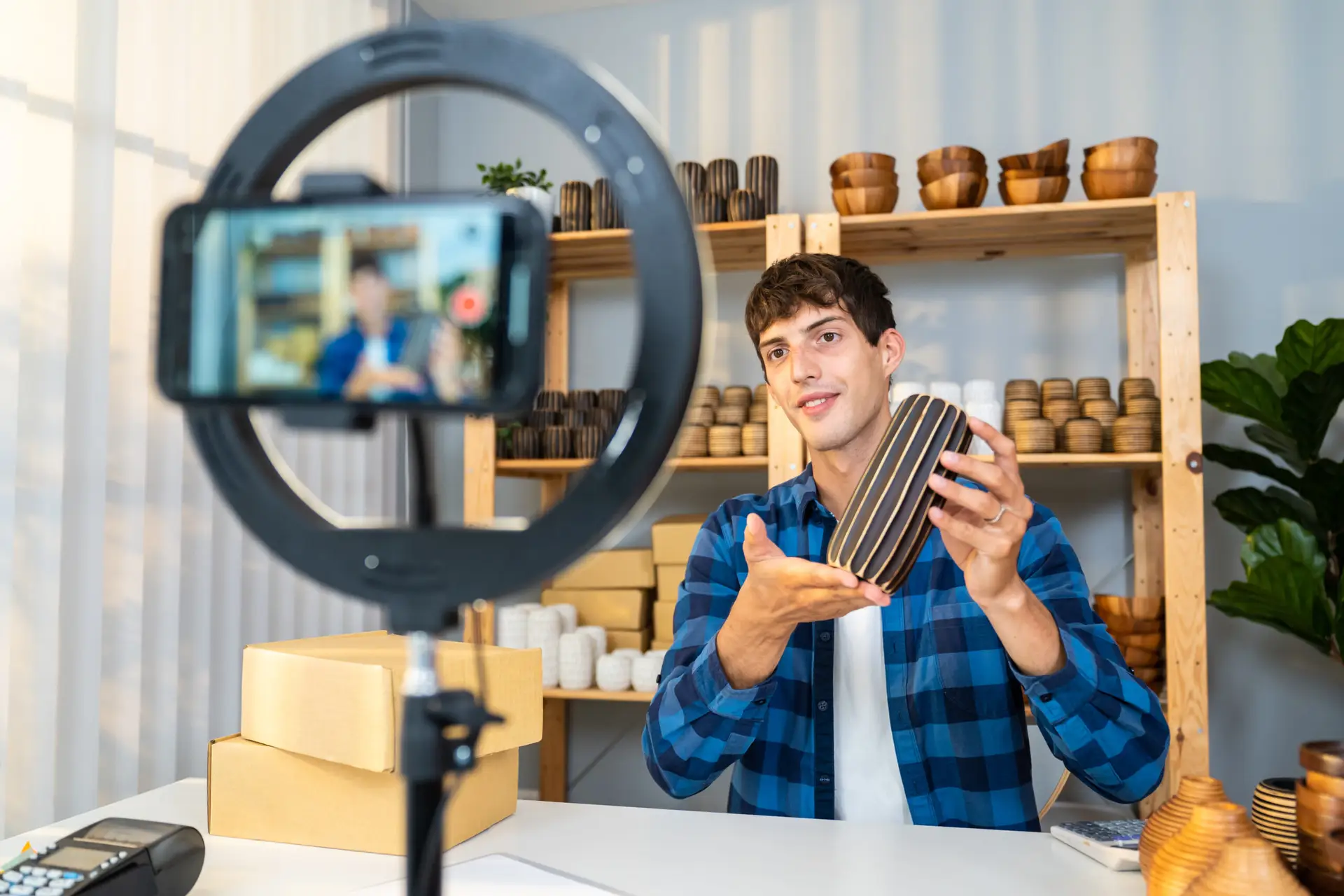
Instead of making a completely new video, the team changed only the opening:
- Removed the logo intro completely.
- Moved the final result to the first frame — the viewer saw the outcome before the explanation.
- Added a bold on-screen line naming the exact problem the product solves.
- Added captions from the first word, designed for sound-off viewing.
- Re-exported a true vertical cut for Reels instead of reusing the square version.
The offer did not change. The audience did not change. The budget did not change. What changed was how many people stopped long enough to see the offer. Hook rate moved from the fix-it zone into the good zone, hold rate improved because the opening promise matched the demo that followed, and cost per result fell because more of the paid impressions turned into actual attention.
The lesson is not “make louder ads.” The lesson is: diagnose where viewers leave before you rebuild everything. If they leave at second one, fix second one. If they leave at second fifteen, fix the promise and pacing — not the thumbnail.
REMEMBER: A hook swap is the cheapest test in Meta advertising. You keep the body, the offer, and the landing page, and you change only the opening. That is why it should be your first test, not your last resort.
The solution: a 5-step system to fix your first 3 seconds
Step 1 — Diagnose before you create
In Ads Manager, add custom columns for hook rate and hold rate. Check them by placement and by audience, not only as one blended account number. A 25% hook rate on Reels can mean something different from 25% in Feed, and a warm retargeting audience will naturally stop more often than cold traffic. Decide: is this a hook problem (people never stop), a hold problem (people stop but leave), or an offer problem (people watch and click, but do not buy)? Fix the right layer.
Step 2 — Rewrite the first frame, not the whole video
Your first frame must do one job in under a second: make the right person think, “This is about me.” Lead with the result, the problem, or a surprising proof point. Remove logos, slow fades and “welcome to our brand” openings from the start. You can put branding later — after you have earned attention.
Step 3 — Write the hook in words, before you shoot
Do not improvise the opening on camera. Write five hook lines first, pick the strongest two or three, and produce those. Use the formulas in the next section. Every hook should be specific enough that the wrong audience scrolls past and the right audience stops. That is a feature, not a flaw.
Step 4 — Produce it for silent, vertical, fast viewing
Captions on. Large text. Face or product close enough to read on a phone. Movement or a visual change early. One idea per video. If you produce short-form clips regularly, a repeatable editing workflow saves hours — this is exactly the kind of work our short-form production workflow is built for (see Internal Links).
Step 5 — Test hooks like a system, not a guess
Test different concepts, not cosmetic copies: a problem hook against a result hook against a question hook. Keep the body and offer the same so you learn what the opening did. Give each test enough impressions to read, kill clear losers below 15%, and make variations of winners before fatigue sets in. Keep a simple hook library: date, first frame, first line, hook rate, hold rate, cost per result. In a month, that sheet becomes your creative strategy.
7 hook formulas you can use today
| Formula | How it works | Example opening line |
|---|---|---|
| Formula | How it works | Example opening line |
| Specific problem | Name the exact pain | “Your ads get clicks on day one, then die. Here’s why.” |
| Mistake/warning | Call out a costly error | “Stop boosting posts like this. You’re wasting budget.” |
| Result first | Show outcome, then explain | “This is the result after 7 days. Here’s what changed.” |
| Curiosity gap | Open a loop the video closes | “The first frame was the problem. Not the budget.” |
| Question | Make the viewer answer silently | “Would you stop for this ad? Most people don’t.” |
| Social proof | Lead with a number or proof | “We tested 5 openings. Only one stopped the scroll.” |
| Pattern interrupt | Show something unexpected | Start mid-action, mid-result, or mid-sentence, never with a logo. |
Notice what these examples do not do: they do not start with the company name, they do not promise everything to everyone, and they do not need the sound on to make sense.
Your 7-day fix plan
Day 1 – Audit: Export your active video ads and screenshot every first frame side by side.
Day 2 – Diagnose: Add hook rate and hold rate columns. Mark every ad: hook problem, hold problem, or offer problem.
Day 3 – Write: Write five new hook lines using different formulas — not five versions of the same line.
Day 4 – Produce: Produce vertical, captioned openings. Keep the proven body of your best video where possible.
Day 5 – Launch: Launch the new hooks as a clean test. Do not change audience, offer, and hook at the same time.
Day 6 – Read: Read hook rate first, then hold rate, then click and cost per result. Pause clear losers.
Day 7 – Scale and learn: Make two variations of the winner and record everything in your hook library for the next round.
Quick checklist before you spend another dollar
- Does the first frame show the result, problem, or proof — not the logo?
- Can a silent viewer understand the hook from on-screen text alone?
- Is the first spoken/on-screen line specific to one audience and one problem?
- Is there a true vertical version for Reels/Stories with text inside safe zones?
- Are you testing genuinely different concepts, not colour changes?
- Do the ad, the landing page headline, and the offer match each other?
- Have you checked hook rate and hold rate in the last 7 days?
FAQs
What is hook rate in Meta Ads, and what is a good number?
Hook rate is the percentage of impressions that become 3-second video views: (3-second views ÷ impressions) × 100. As a practical guide, below 15% needs a rebuild, 15%–25% is the fix-it zone, 30%–40% is good, and 40% or above is exceptional on cold traffic. Always compare the same placement and audience type.
Why do most Meta ads fail in the first 3 seconds?
Because they open like a brand presentation instead of a scroll-stopper: logo intros, slow product shots, generic claims, no captions for sound-off viewing, and the best result saved for later. The viewer decides before the offer appears, so the ad pays for impressions that never become attention.
How do I fix a low hook rate without making a new video?
Change only the opening. Remove the intro, move the result or problem to the first frame, add a bold specific on-screen line, turn captions on from the first word, and export a true vertical cut for Reels. Test that new opening against the old one with the same body, audience and offer.
What should I test first: audience, budget, or creative?
Test the hook first when hook rate is low. If people never stop scrolling, audience and budget changes cannot rescue the ad. Once the hook is healthy, test the offer, then the landing page match, and only then scale budget on the winning concept.
How often should I refresh Meta ad hooks?
Watch hook rate, frequency and click-through rate weekly. When frequency rises and CTR falls, fatigue is starting. Keep a pipeline of new concepts ready — variations of winners plus genuinely new angles — so you replace a tired hook before costs climb, not after.
When you should not blame the hook
Honesty matters here. A great hook cannot save a weak offer, broken tracking, or a landing page that contradicts the ad. If your hook rate and hold rate are healthy, people click, and still nobody buys — your problem is after the click. Check the offer, the page speed on mobile, the headline match, and whether the price and promise make sense together. Fix in order: tracking, offer, creative system, then campaign structure.
Final thought: earn the fourth second
Your ad does not need to convince everyone in three seconds. It only needs to earn the fourth second — and then the fifth. Show the right person their problem or their result, in the first frame, in words they can read with the sound off. Do that consistently, test it honestly, and your budget finally starts buying attention instead of just impressions.
If your ads are spending but not stopping anyone, start with one video this week. Screenshot its first frame. Ask one question: “Would I stop for this?” Then apply the five steps above before you spend more.
NEED HELP?: Cybill Systems helps businesses with online services, social media marketing, and short-form video production. If you want your ad creatives and hooks reviewed, get in touch through the Contact page linked below.
Sources and further reading
Benchmarks in this article are practitioner benchmarks — Meta does not publish an official hook-rate benchmark. Figures were cross-checked across the sources below on 19 October 2026. Compare your numbers against your own account history first.